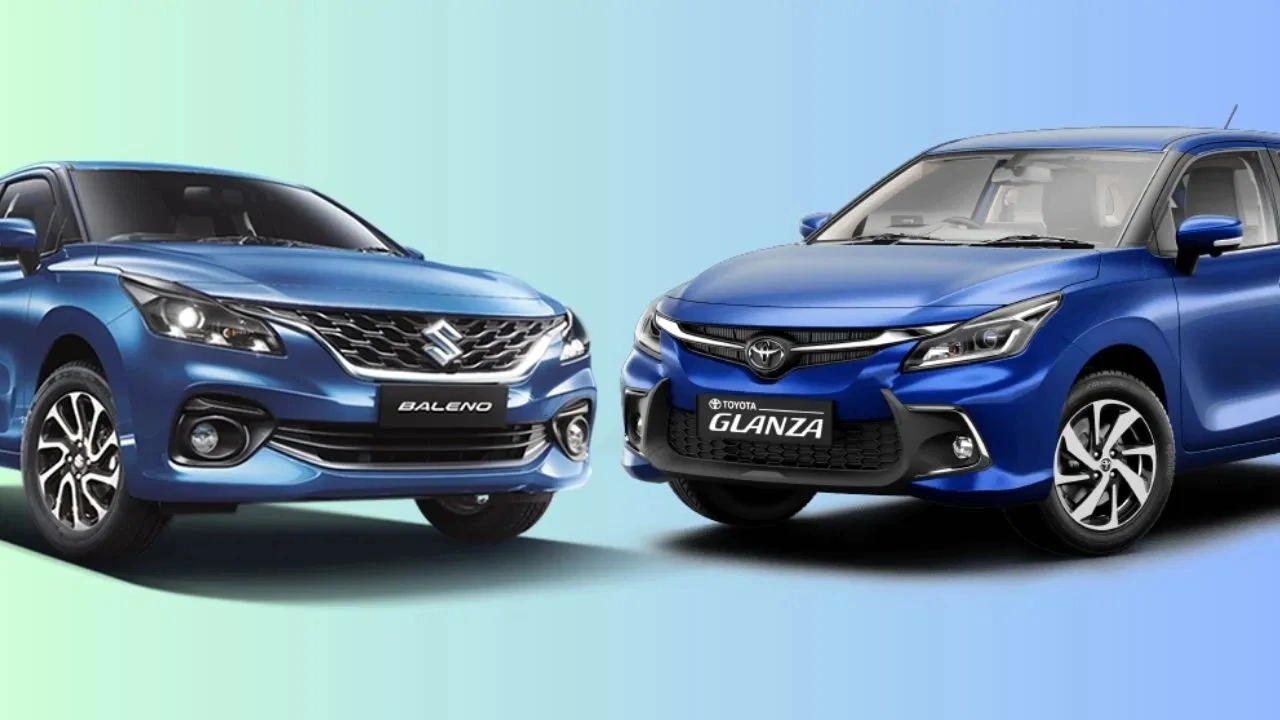
Are you confused between the Baleno and the Glanza for daily use? You’re not alone — many buyers struggle to pick the better option for everyday travel. In this blog, you’ll get a clear, simple comparison of Baleno vs Glanza based on price, mileage, and real-life usability. By the end, you’ll know exactly which car fits your routine, your budget, and your driving style.
What these cars really are (same bones, small differences)
First off, let’s clear one big point: the Baleno and the Glanza are essentially the same car under the skin. Toyota rebadged the Maruti Suzuki Baleno as the Glanza. That means they share the platform, engines, most features and dimensions. In short, when we compare Baleno vs Glanza we’re mostly looking at price, warranty, dealer network and a few small ownership perks.
Engines, mileage and real‑world fuel numbers
Both cars offer similar engine choices. Here are the main options and claimed ARAI economy numbers:
- Mild‑hybrid 1.2 K12N Dual‑Jet: ~90 PS — ARAI around 23.8–23.9 kmpl. This is the most efficient option for city commuting.
- Non‑hybrid 1.2 K12M (NA petrol): ~83–89 PS — ARAI roughly 21.0–22.4 kmpl depending on gearbox.
- Factory CNG (Baleno where offered): ~30.6 km/kg — a big saving if you have easy CNG access.
In real life you’ll usually see lower numbers than the ARAI claims. Owner reports and road tests show:
- City: about 16–19 kmpl for the NA petrol, better for the mild‑hybrid.
- Highway: typically low‑20s kmpl for petrol models.
So if you do heavy city running every day, the mild‑hybrid versions of either car will save you the most fuel.
Price, warranty and service — the real ownership drivers
Price bands (ex‑showroom India, approximate):
| Model | Approx. ex‑showroom Price | Warranty / Dealer Network |
|---|---|---|
| Maruti Suzuki Baleno | ₹6.6–9.9 lakh | Large Maruti network (~5,400+ service touchpoints), standard Maruti warranty |
| Toyota Glanza | ₹6.9–10.0 lakh (Toyota sometimes undercuts Baleno on same trims) | Toyota warranty offers can be stronger (e.g., promotional 3 yr/100k km); smaller dealer network |
What that means for you: Toyota has sometimes priced the Glanza cheaper on a spec‑for‑spec basis, and has offered longer warranty packages during launch. But Maruti’s huge service and workshop network makes day‑to‑day ownership easier and often cheaper. For example, if you live in a smaller town, a Baleno service centre is more likely to be nearby than a Toyota one.
Daily use cases — examples and a quick cost check
Let’s look at two short examples to make this practical.
Example 1 — City commuter, 50 km/day (22 working days)
- Monthly distance: ~1,100 km.
- If you pick the mild‑hybrid and achieve a real‑world 22 kmpl, you’ll use ~50 litres/month. At a petrol price of ₹100/l, that’s ~₹5,000/month. If the NA petrol does 17 kmpl, fuel jumps to ~65 litres or ~₹6,500/month.
- Conclusion: the mild‑hybrid trims of either car save meaningful monthly fuel bills for city use.
Example 2 — High‑mileage owner, 30,000 km over 3 years
- Resale and servicing matter here. Baleno’s wider Maruti network typically gives lower service costs and stronger resale values. Over 3 years that can save you several thousand rupees versus the Glanza, depending on local demand.
- If you want the lowest short‑term purchase price on a given trim, the Glanza mild‑hybrid sometimes has a lower sticker than the Baleno hybrid — that reduces upfront cash need.
Safety, features and comfort — tied match
Because the cars are mechanically identical, the two models match closely on kit. You’ll find similar infotainment systems (Android Auto/Apple CarPlay), LED lighting options, and safety equipment across trims — including up to six airbags and electronic stability control on higher trims. The differences are mostly in trim names, small styling cues and dealer packaging.
So which should you choose? Quick recommendations
Here’s how I’d pick based on how you use the car:
- Choose the Glanza if you want the cheapest spec‑for‑spec buy, prefer a stronger warranty package at purchase, or want the mild‑hybrid model at a slightly lower price. The Glanza is a good pick if upfront cost and warranty peace of mind matter most.
- Choose the Baleno if you value the largest possible service network, lower long‑term running hassle, better resale prospects and access to factory CNG (where offered). For most high‑mileage daily commuters I know, Baleno’s service reach and CNG option make it more practical long term.
Also Read: Ola & Ather in Trouble? VinFast’s New Electric Scooters Set to Shake Up 2026 Market
How I’d test them before buying
I recommend the following steps before you decide:
- Test‑drive the exact trim and gearbox you plan to buy (mild‑hybrid vs NA, MT vs AMT).
- Ask dealers for the final on‑road price, and compare the Glanza and Baleno after discounts.
- Check warranty offers and available service packages in your city — Toyota sometimes bundles longer warranty deals.
- If you drive a lot in the city, prioritize the mild‑hybrid. If you have CNG access and want the lowest fuel cost, check the Baleno CNG option.
Final Thoughts
When we compare Baleno vs Glanza, there’s no big difference under the hood — both cars share engines, size and most equipment. Your best choice comes down to ownership priorities. If you want the lowest spec‑for‑spec purchase price and a strong launch warranty, the Glanza can be attractive. If you value a huge service network, easier servicing, better resale and the option of factory CNG, the Baleno usually makes more sense for daily, high‑mileage use.
Want help narrowing it down? Tell me your city and your expected daily kilometres, and I can pull approximate on‑road prices or build a simple 3‑year ownership cost comparison for a chosen Baleno and Glanza trim.