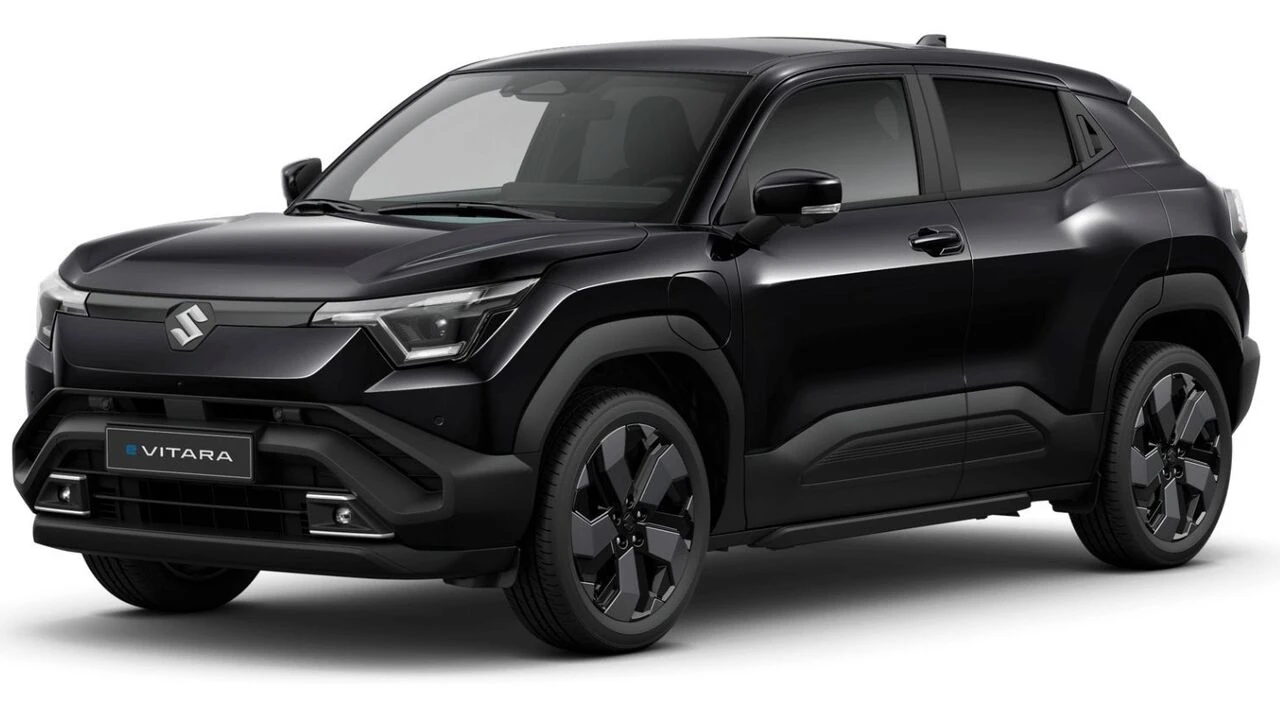
Are you waiting for a budget-friendly, practical electric car from Maruti? If yes, tomorrow might finally bring the answer you’ve been hoping for. Maruti is all set to launch its first-ever electric car, the E-Vitara, and this new model promises to shake up India’s EV market in a big way.
In this blog, you’ll discover what this launch means for buyers, what important details you should watch for, and how the E-Vitara could completely change the EV game with Maruti’s trusted reliability. Stick with me till the end — you’re going to get a clear, simple, and complete picture of what to expect from Maruti’s first electric revolution.
Why the e‑Vitara matters
We all know Maruti Suzuki as the maker of affordable, reliable cars for India. The e‑Vitara is different: it’s their first all‑electric production vehicle. That shift is a landmark move. For many buyers, a Maruti EV means easier service, a wider dealer network, and lower running costs — things that matter when people choose an electric car.
Quick fact: The e‑Vitara will be launched on December 2, 2025, with deliveries expected soon after. Production began earlier in August 2025 and Maruti plans both domestic sales and exports.
What’s under the hood: battery, range and power
Here’s what Maruti and media reports are telling us so far. The e‑Vitara will offer two battery packs: ~49 kWh and ~61 kWh. Maruti claims the larger pack can deliver up to ~500 km of range — that’s based on manufacturer/agency test cycles, not necessarily real‑world driving.
Drive layouts include 2WD for both battery sizes, and a 4WD twin‑motor option called ALLGRIP‑e with the 61 kWh pack. Power figures reported in the media fall roughly in the 142–172 bhp range, with the AWD twin‑motor variant offering higher torque.
Platform, cells and tech — why it’s built to last
The e‑Vitara rides on a dedicated EV architecture called HEARTECT‑e / 40PL — a skateboard layout co‑developed with Toyota. Reports say the battery uses LFP chemistry, likely BYD’s blade cells. LFP batteries are known for safety and longer life, which is good for daily use and resale value.
On the tech side, Maruti has packed the e‑Vitara with modern features: a Level‑2 ADAS suite (adaptive cruise, lane‑keep, AEB), up to seven airbags, 360° camera, dual‑screen infotainment and cluster, ventilated front seats, and wireless charging. That level of kit supports both safety and comfort for families.
Variant snapshot — a quick comparison
Below is a simple table to compare the expected high‑level specs across likely variants. These figures are based on current media reports and Maruti’s claims; final numbers (ARAI/WLTP labels, exact bhp/torque) will be confirmed at the launch.
| Variant | Battery (kWh) | Drive | Claimed Range (km) | Power (bhp) |
|---|---|---|---|---|
| Base EV | ~49 | 2WD | ~300–350 (estimated) | ~142 |
| Long‑Range EV | ~61 | 2WD | ~450–500 (manufacturer claim) | ~160 |
| ALLGRIP‑e (AWD) | ~61 | 4WD (twin‑motor) | ~420–480 (estimated) | ~172 |
Price, availability and after‑sales — what to expect
Media estimates put ex‑showroom prices roughly between ₹17–22 lakh. We’ll get official pricing at the launch — that will determine how attractive the e‑Vitara is against rivals and ICE models. Maruti says deliveries will begin shortly after the event.
Maruti’s “e for Me” strategy also matters. They plan dealer fast chargers in major cities, a smart home charger for buyers, and a network of about 1,500 EV‑ready service centres. That support network could ease one of the biggest concerns for EV buyers: service and charging availability.
Real examples and why they matter
Let me give you two short examples that show why this launch could be important:
- Urban family: A couple in Pune who currently drive a petrol Maruti might be tempted by a Maruti EV because of trusted service and easy financing. If the e‑Vitara long‑range variant delivers close to ~500 km in normal use, it removes range anxiety for weekend trips.
- Fleet / taxi operators: Lower running costs and LFP batteries that last longer could make the e‑Vitara appealing for cab fleets. If Maruti offers competitive total cost of ownership, we could see faster adoption in shared mobility.
Also note the export angle: Maruti has talked about selling the e‑Vitara in overseas markets. If the car proves reliable, it could boost India’s EV manufacturing exports.
Also Read: New 2026 Kia Seltos Teaser Released – Major Design Changes Revealed
What to watch at the launch
When the event starts on December 2, here’s what I’ll be watching — and you might want to keep an eye on the same items:
- Official variant list: Exact names, feature levels and confirmed power/torque figures.
- Range labels: Is the claimed ~500 km figure ARAI, WLTP, or a manufacturer cycle? Real‑world numbers will differ.
- Charging specs: DC fast‑charge rates, AC home‑charger specs, and claimed times to 80%.
- Warranty & service: Battery warranty years/kilometres and details of the 1,500 service‑centre rollout.
- Pricing & bookings: Ex‑showroom prices, on‑road ballpark, booking dates and delivery timelines.
Final Thoughts
The e‑Vitara could be a game changer for EV adoption in India. It brings Maruti’s scale, dealer reach, and a trusted brand to the electric market. With two battery sizes (~49 kWh and ~61 kWh), an AWD ALLGRIP‑e option, Level‑2 ADAS, and LFP blade cells, Maruti is aiming for safety, range, and practicality.
That said, the true test is in the details announced tomorrow: exact range numbers, official prices, and charging times will decide how many buyers switch. I’ll be following the launch closely — and I’ll share a quick TL;DR or checklist if you want.
Would you like a one‑paragraph TL;DR or a short checklist of what to look for in the livestream and press release?